
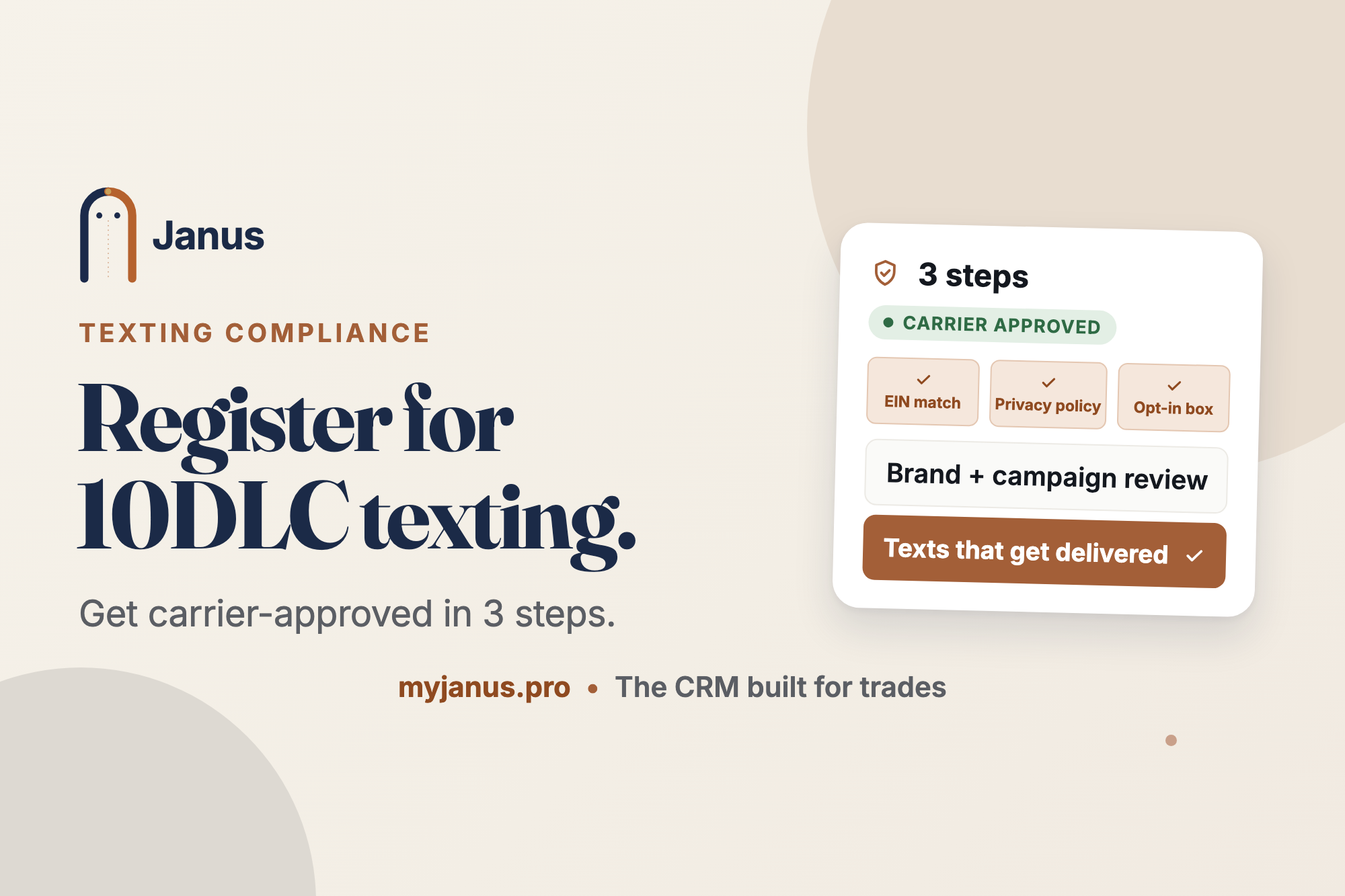
How to Complete 10DLC Registration for Your Local Service Business in 2027
Federal law requires a customer’s consent before your business texts them, and the mobile carriers now require every business to register before its texts are delivered at all. Here’s how to meet both in three steps…
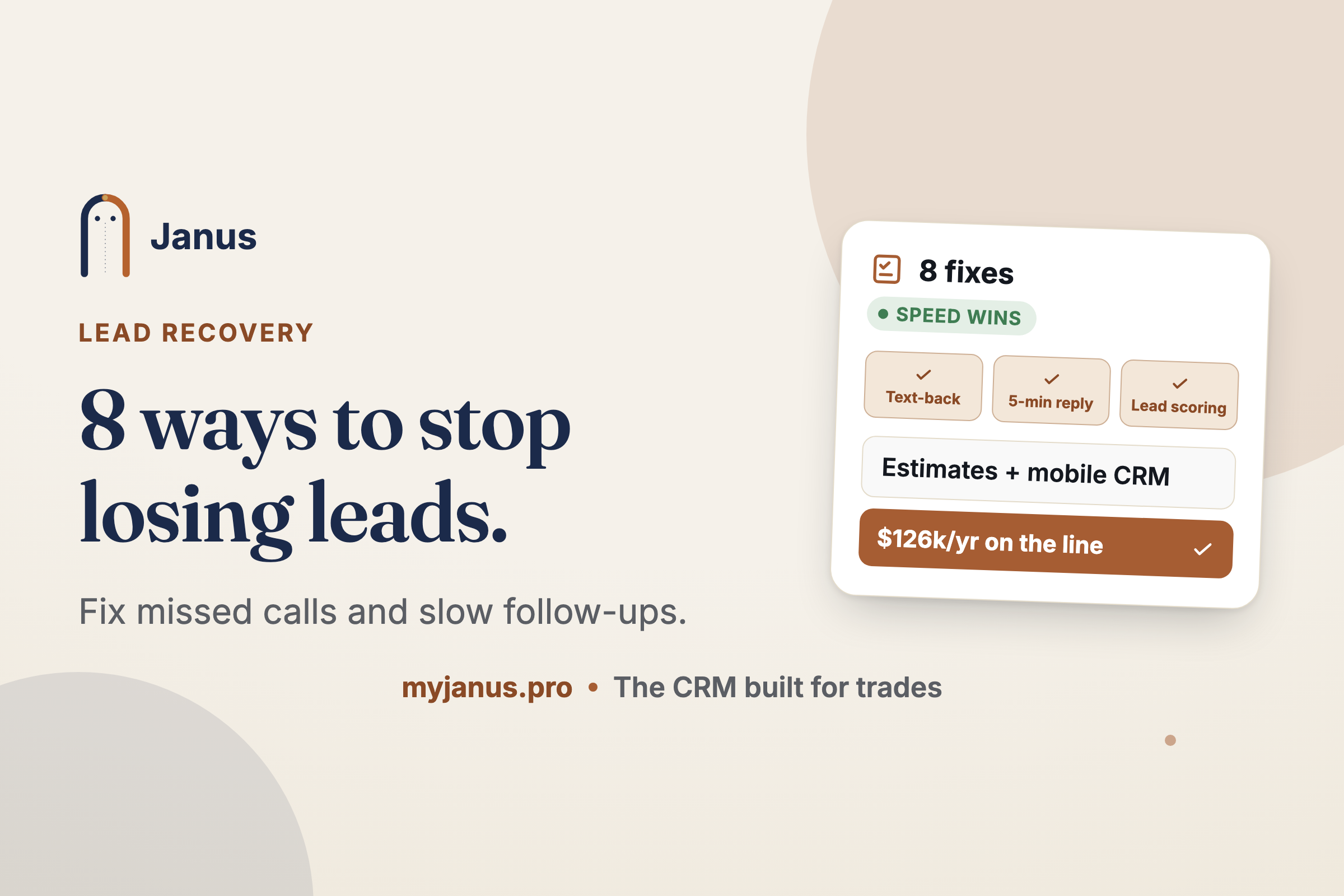
8 Ways to Stop Losing Leads: Fixing Missed Calls and Slow Follow-Ups in 2027
The average small service business loses about $126,000 a year to missed calls, and most buying decisions are made within five minutes of first contact. Here are eight practical fixes, from missed-call text-back and lead scoring to branded estimate pages and a mobile pipeline.
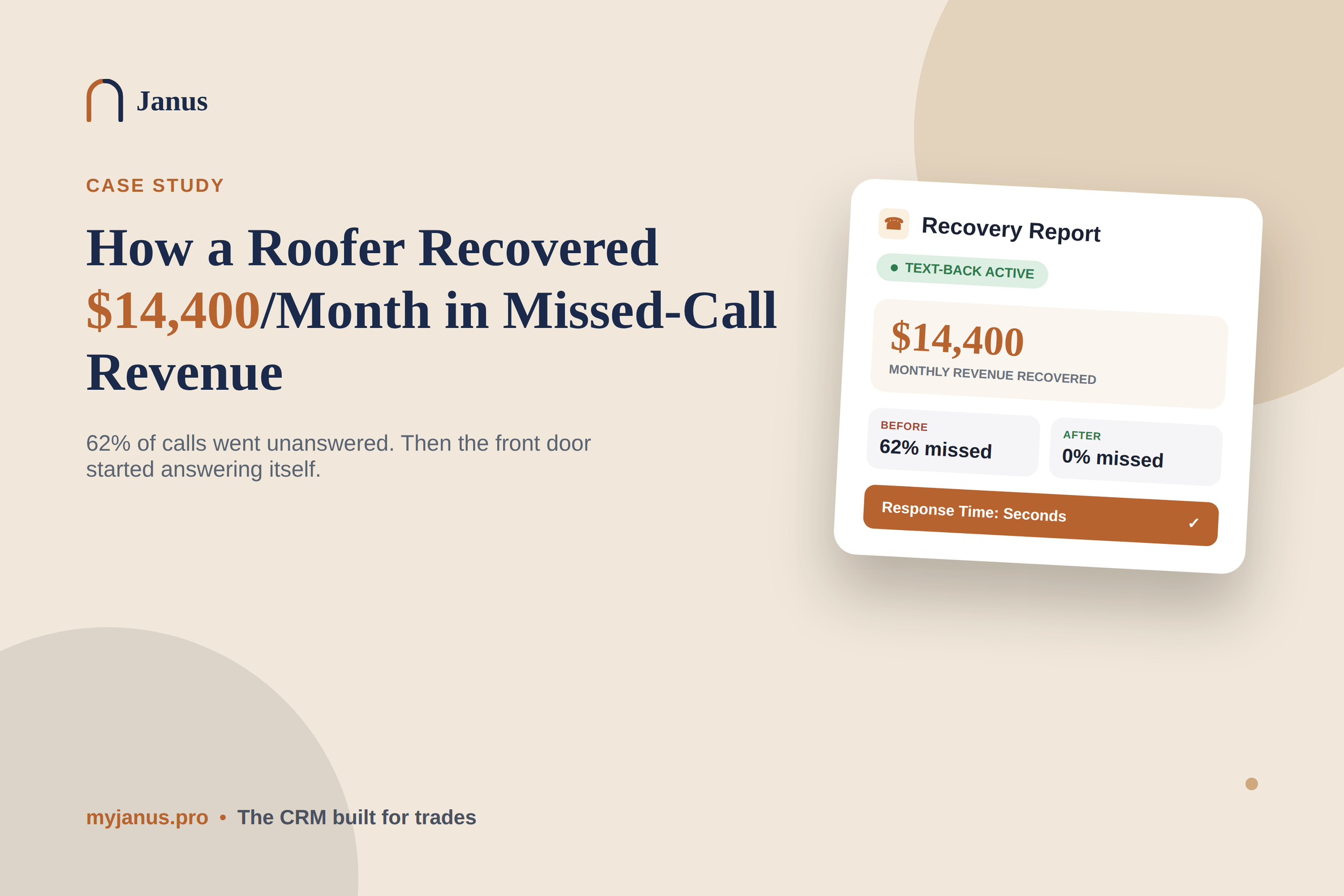
How a Local Roofing Contractor Recovered $14,400 in Monthly Revenue with Missed Call Text-Back
A missed call during business hours isn't a fluke — for most contractors it's 62% of the calls that come in, and the caller waits about 20 seconds before dialing the next name on the list. This case study follows a three-truck roofing crew that closed that gap with automated text-back: every missed call gets an instant reply while the customer's still engaged, no receptionist, no answering service. The result was $14,400 a month back on the books — revenue they'd already paid to generate and were simply never picking up.
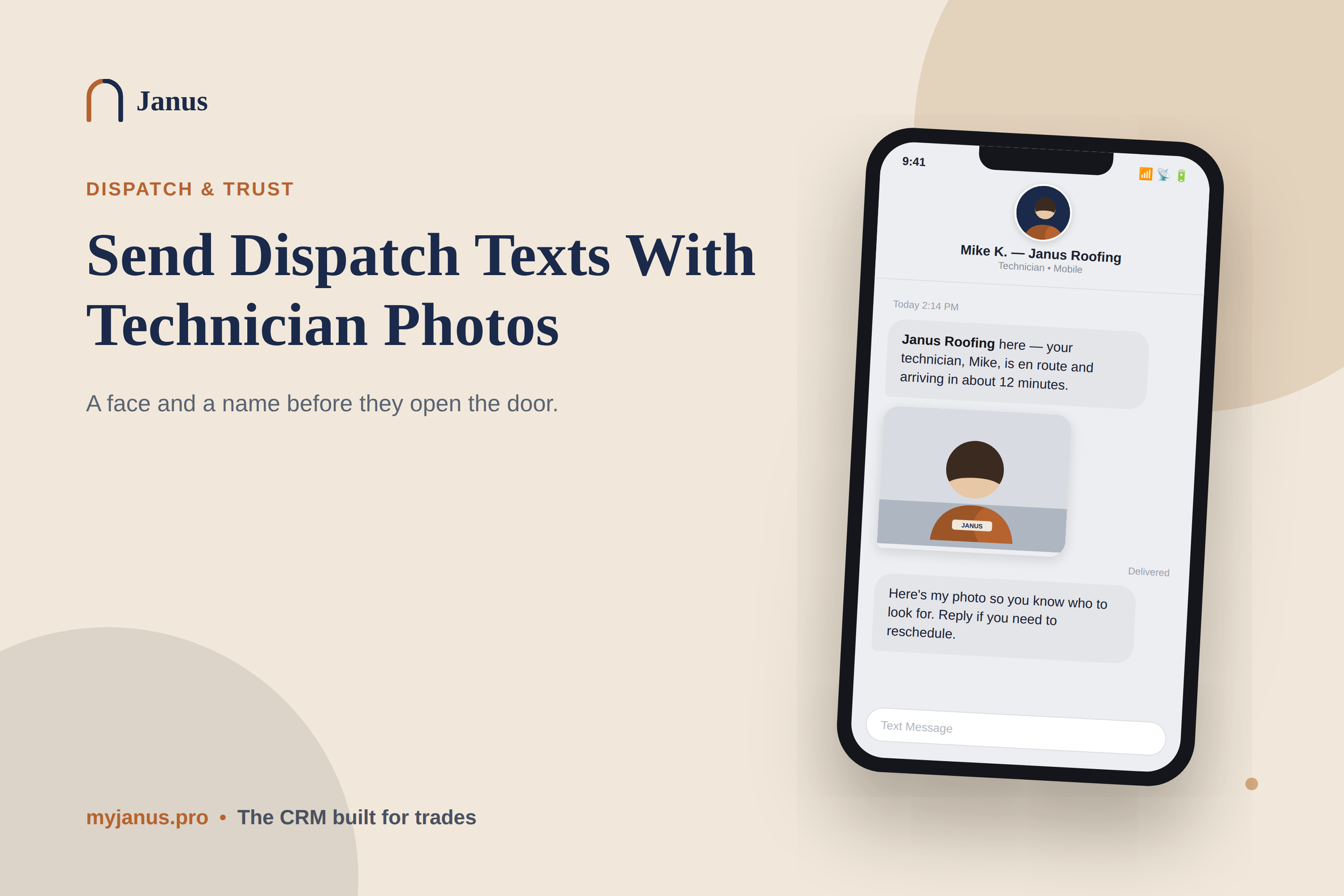
How to Send Dispatch Text Messages with Technician Photos in 5 Steps
A photo and a short intro does something — they turn "someone's on their way" into "I know who is coming".
On a sales call, it's a few seconds of rapport already banked before the rep says a word — a face, a name, years in the trade, what they're there to look at. It builds your brand and their trust. It’s what you need to look and feel different than your competitors.
Why Multi-Location Service Businesses Lose Leads Before Anyone Picks Up the Phone
A homeowner with a hail-damaged roof doesn't shop carefully. They search, tap the first number that looks local, and if nobody answers, they tap the next one.
That's the real math of multi-location lead capture. One truck missing one call is a bad afternoon. Five territories each missing a handful of calls a week during storm season is a revenue line you'll never see on a report — because it was never recorded anywhere.
I broke down the two problems killing lead capture at scale (missed calls + inconsistent intake across locations) and the "digital front door" framework we use to fix both. Link in comments.
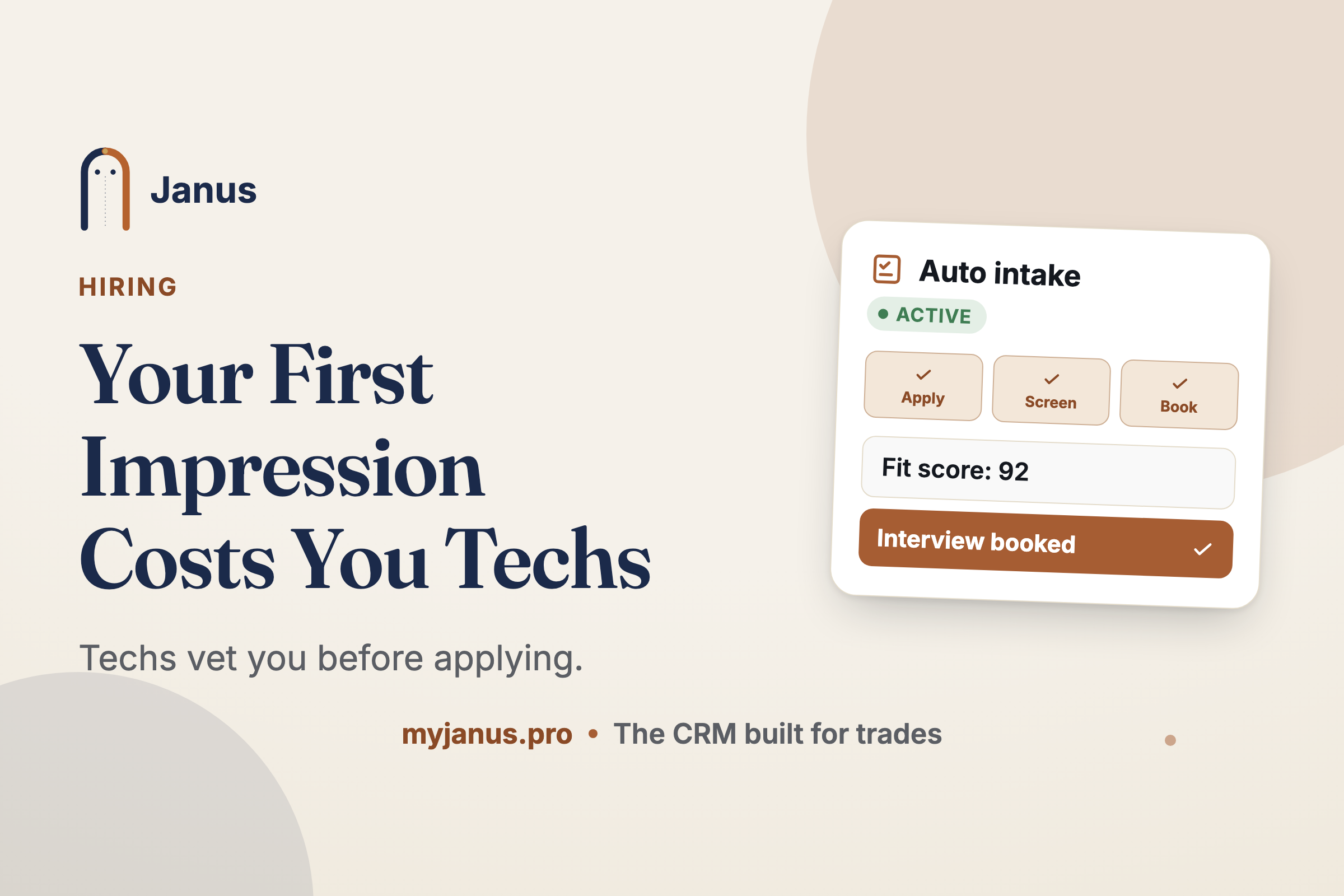
The Recruitment Front Door: Why Your First Impression Is Costing You Top Talent in 2027
Skilled techs research your company like a customer would — long before they ever apply. If your careers page feels like an afterthought, you're losing top talent before the interview. Here's how to fix your recruitment front door in 2027.
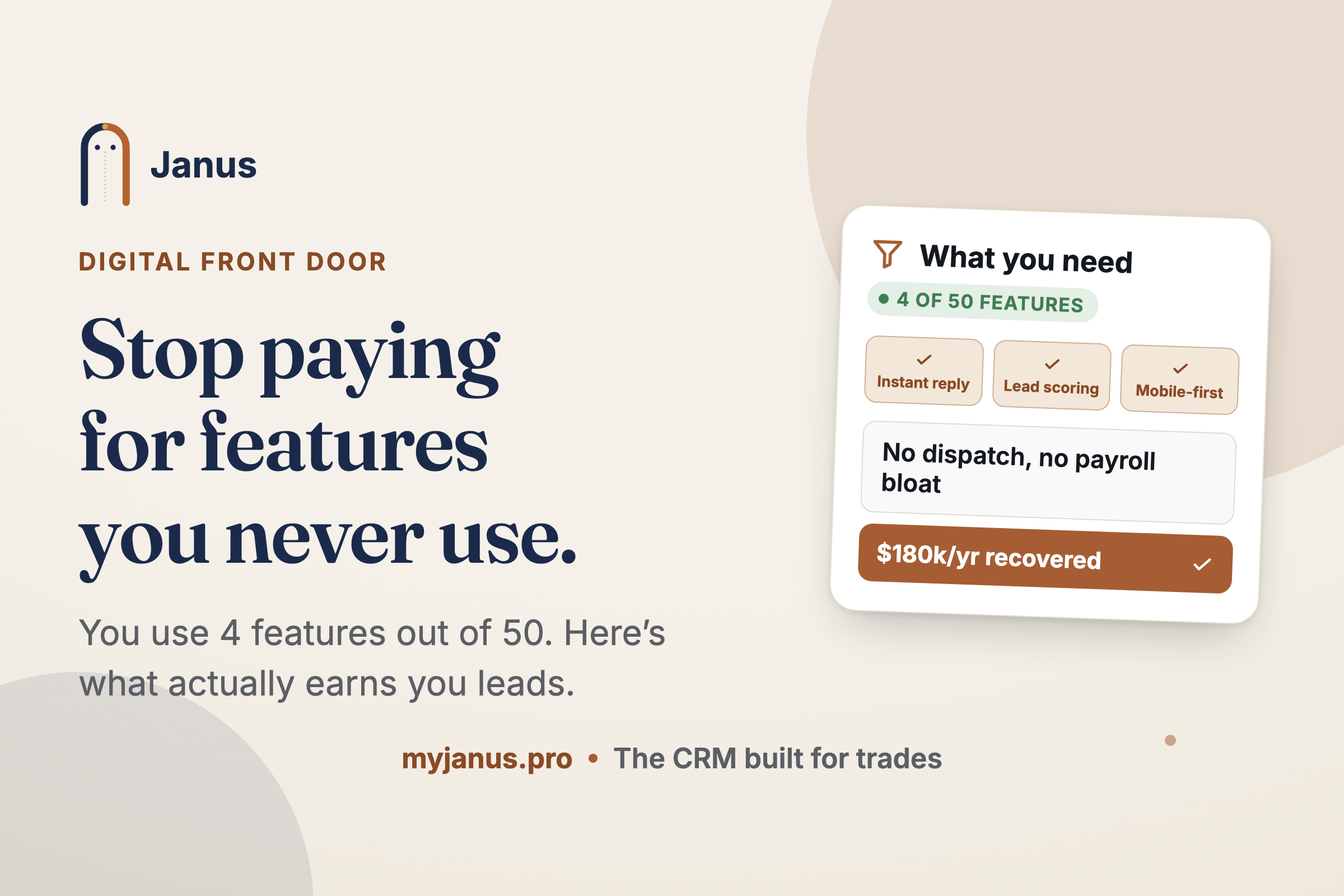
Stop Paying for Features You Don't Use: Why Your Trade Business Needs a Digital Front Door, Not More Bloat
Most trade businesses use maybe four features out of the fifty they're paying for on a bloated all-in-one platform — and the gap costs real money. Missed calls alone run ~27% of inbound, worth roughly $180,000 a year in lost revenue for a mid-sized shop, since a lead contacted within 5 minutes converts 21x better than one followed up after 30. The case for a lean digital front door: it sits in front of whatever CRM or dispatch tool you already have, catching and scoring leads instead of replacing your back office.
9 Best Marketing Automation Software Tools for Small Business in 2027
85% of callers who hit voicemail never leave a message, and small businesses miss 20–35% of calls during business hours — which is why this roundup puts speed-to-lead automation ahead of everything else. Janus ranks #1 for catching the first touchpoint (missed-call text-back, branded intake, mobile-first pipeline) before the other eight — HubSpot, Brevo, ActiveCampaign, Zapier, Thryv, and more — even get a chance to nurture the lead.
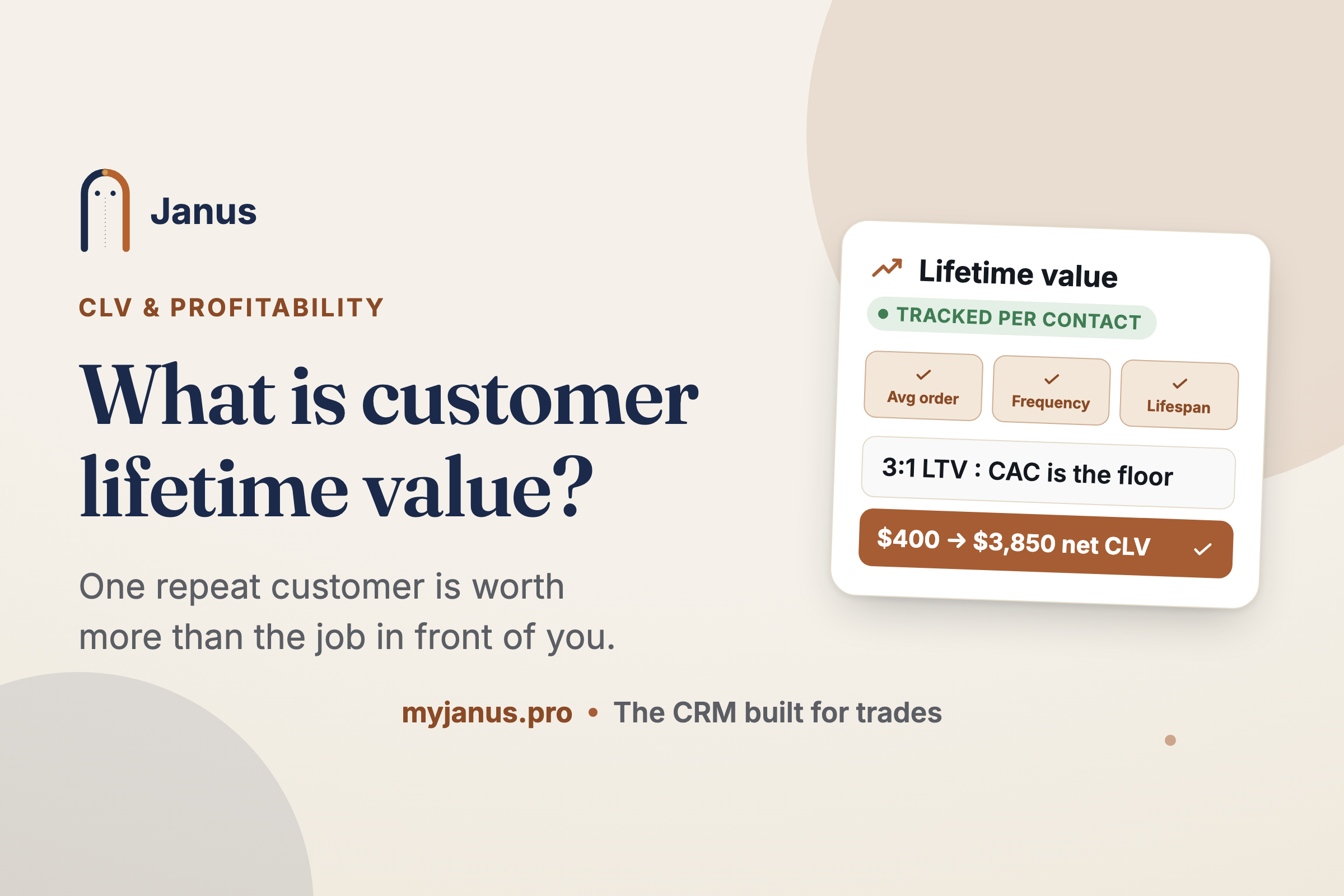
What Is Customer Lifetime Value (CLV)? A Guide to Calculating and Mastering Long-Term Profitability in 2027
CLV is the total revenue you can reasonably expect from one customer across the whole relationship — not just the job in front of you. This guide breaks down the formula (average revenue × lifespan − acquisition cost, with a worked $400-per-visit landscaping example netting $3,850), the three inputs that drive it (order value, purchase frequency, customer lifespan), and why a 3:1 LTV-to-CAC ratio is a floor, not a finish line. It also ties CLV back to what happens at first contact — speed to lead and lead scoring shape the number long before the first invoice.
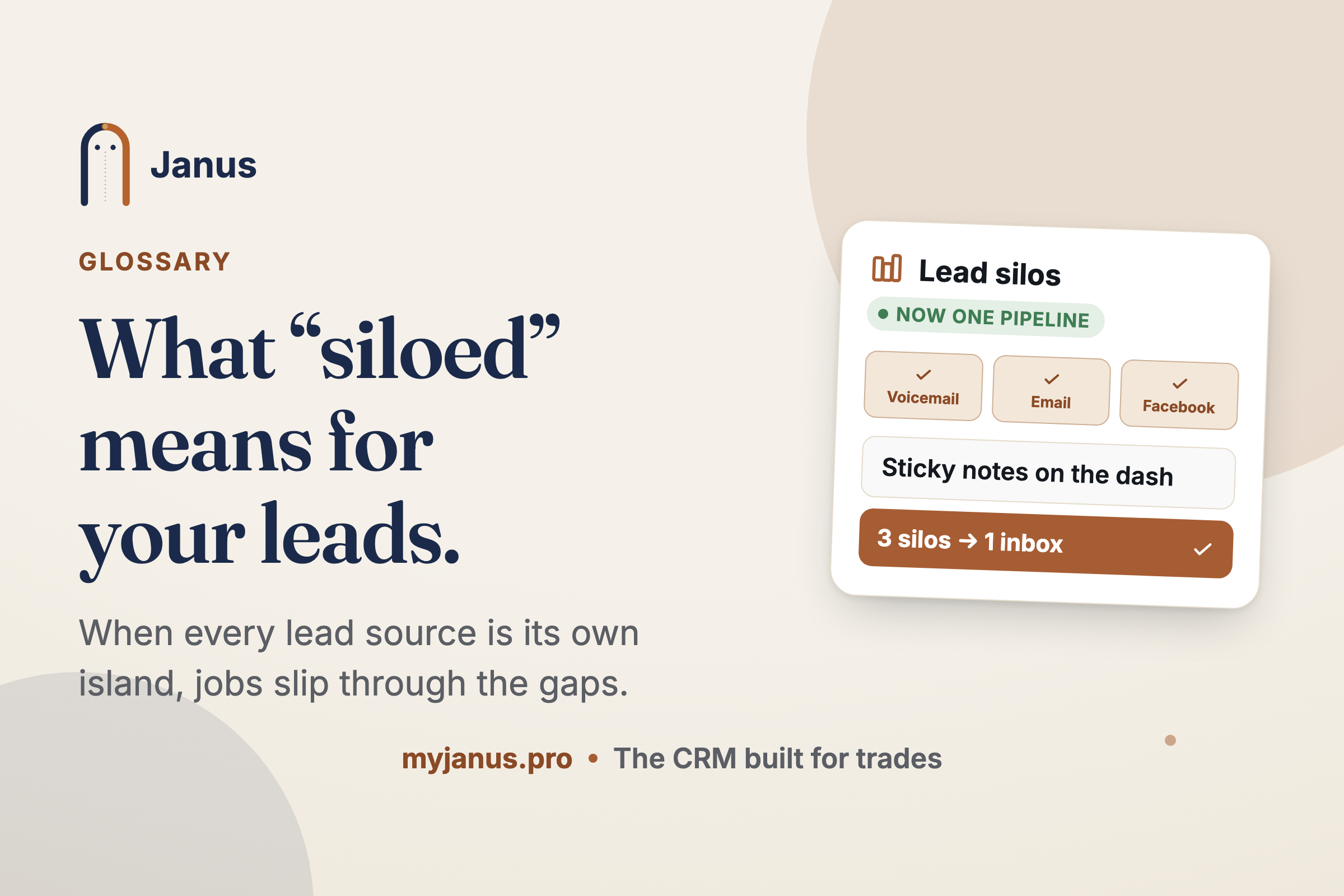
What Does Siloed Mean? A Modern Business vs. Workplace Reality
"Siloed" comes from grain storage — tall containers that keep everything separate. In a business it means teams, data, or systems that don't talk to each other: customer info in one place, scheduling notes in another, job history in a third. The cost shows up as duplicate data entry, slow decisions made without context, and lost revenue from broken attribution. This post defines the term, its synonyms (isolated, compartmentalized, fragmented), and how to break silos — a unified intake point, shared visibility for the whole crew, one scoring language, and integrations that connect the tools you already use.
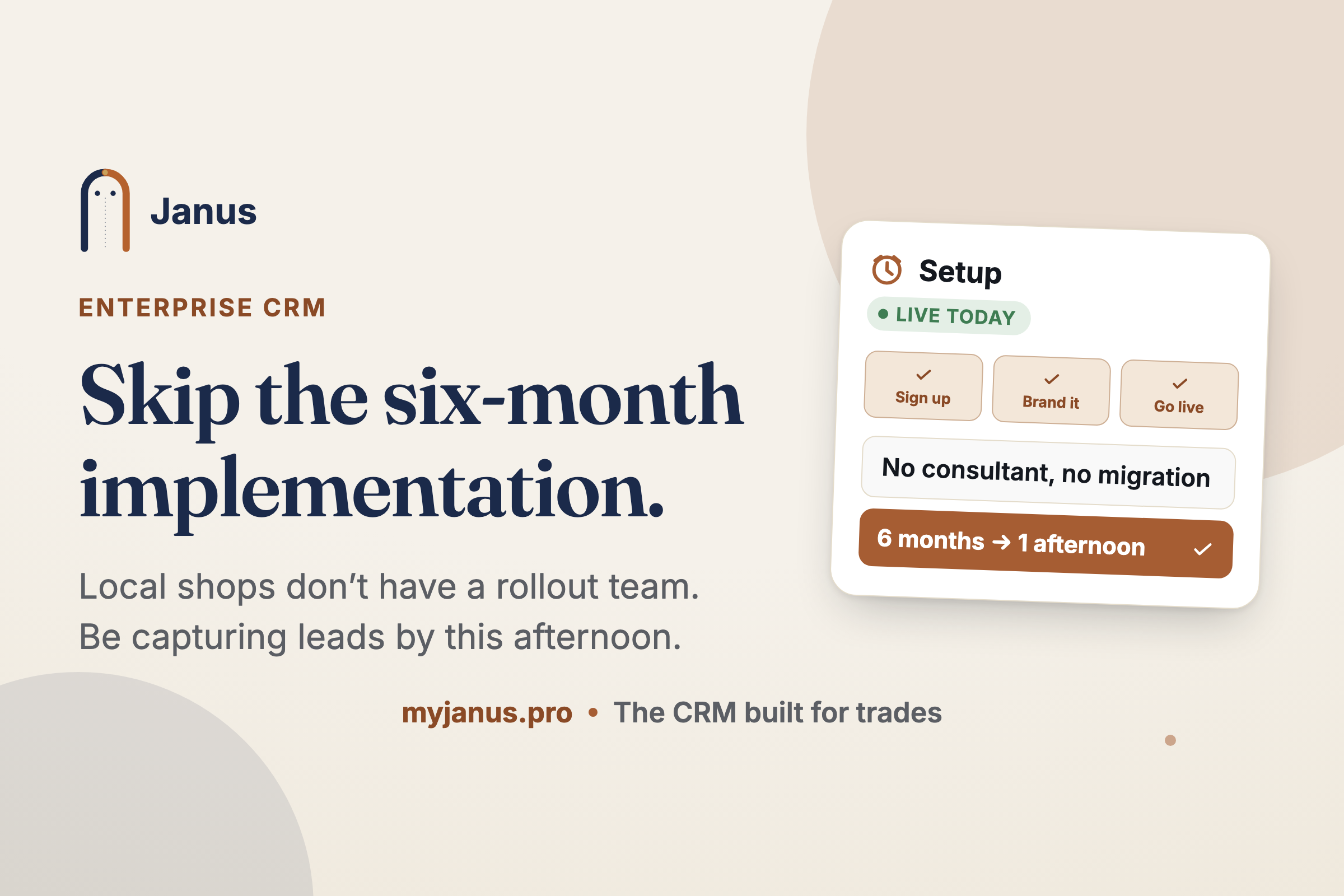
Janus vs. Enterprise CRM: Why Local Service Shops Are Skipping the 6-Month Implementation
Enterprise CRMs bill full subscription fees for months while a consultant-led rollout produces zero ROI — what this piece calls the "complexity tax," alongside per-seat licensing and training overhead. For a 1–5-truck shop, that six-month cycle isn't a tradeoff, it's a dealbreaker. This comparison lays it out: Janus goes live in minutes via a setup wizard with flat pricing for unlimited users and automated lead capture on day one; enterprise platforms want weeks of IT time and headcount-based fees before a single lead is captured.
Janus vs. Traditional Field Software: The Best Lead Capture Tools for Snow Removal Companies
Snow removal has a lead-capture problem no dispatch software was built for: demand floods in during 12-hour storm windows, 62% of inquiries land outside business hours, and roughly 27% of calls get missed — with fewer than 3% leaving voicemail. This comparison puts Janus (instant missed-call text-back, lead scoring, mobile-first) against traditional all-in-one field CRMs (scheduling, invoicing, dispatch — all back-end). The takeaway: use a front-door tool to catch the storm surge, a field CRM to run the back office, and flat pricing so seats don't scale with your crew.
The Multi-Location Digital Front Door: A Field Service Guide to Scaling Lead Capture
A single missed call can cost a $5,000–$20,000 job, and 77% of multi-location marketers say running localized digital programs at scale is the hard part. This guide breaks the multi-location digital front door into four components — location-specific missed-call text-back, centralized lead scoring and routing, unified-but-local branded intake pages, and revenue tracking per territory — plus the KPIs to watch (time to first response under two minutes) and the pitfalls to skip (bloated forms, automation with no human follow-up).
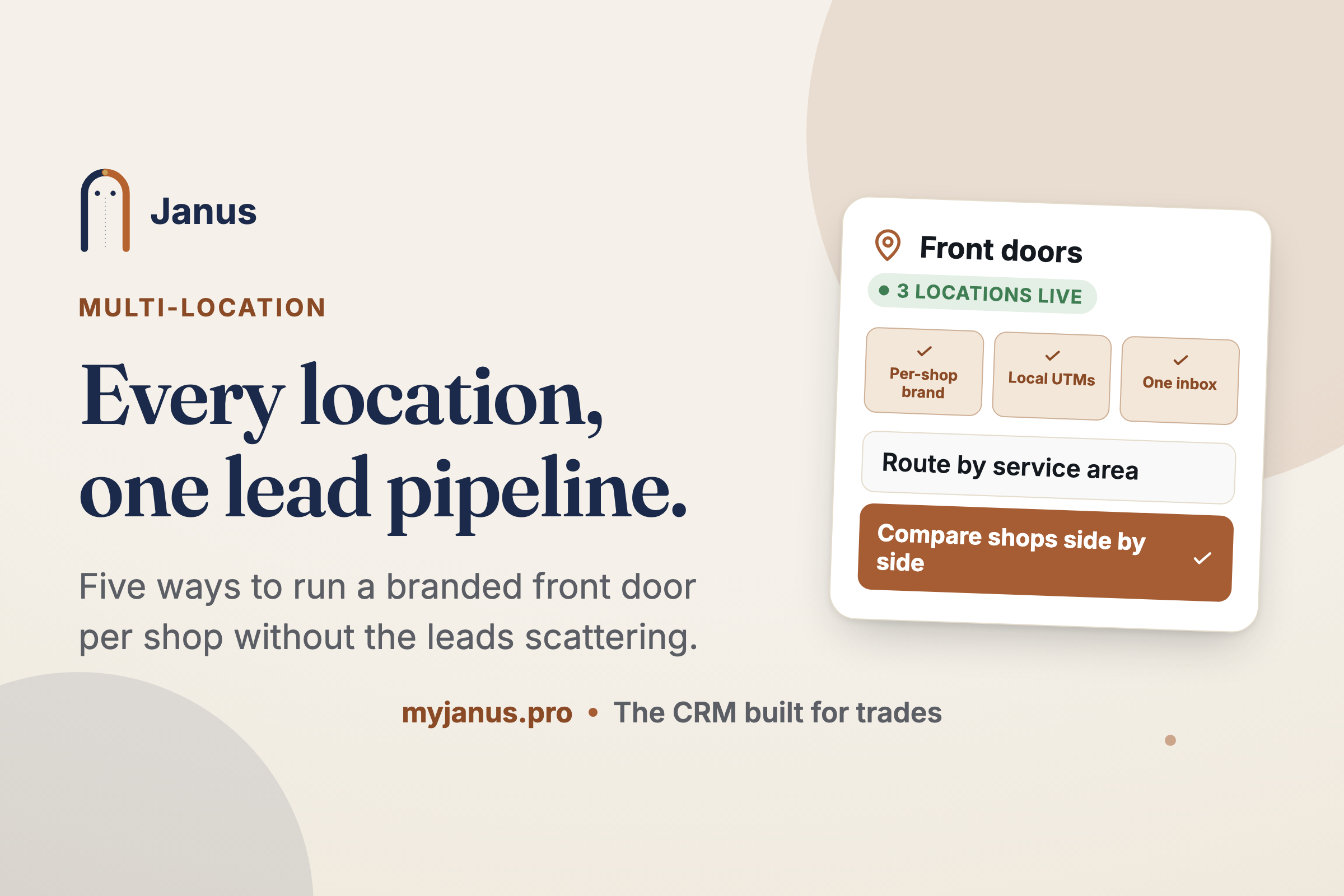
5 Digital Front Door Best Practices for Multi-Location Service Shops
When you run multiple shops, leads scatter — one location drowns while another sits idle, and the brand feels different at every entry point. This piece lays out five practices to run one unified front door across all of them: instant missed-call text-back, centralized lead scoring that balances workload by job size and zip code, consistently branded intake pages, a CRM the whole thing feeds into, and per-location attribution so marketing spend follows the data, not a guess.
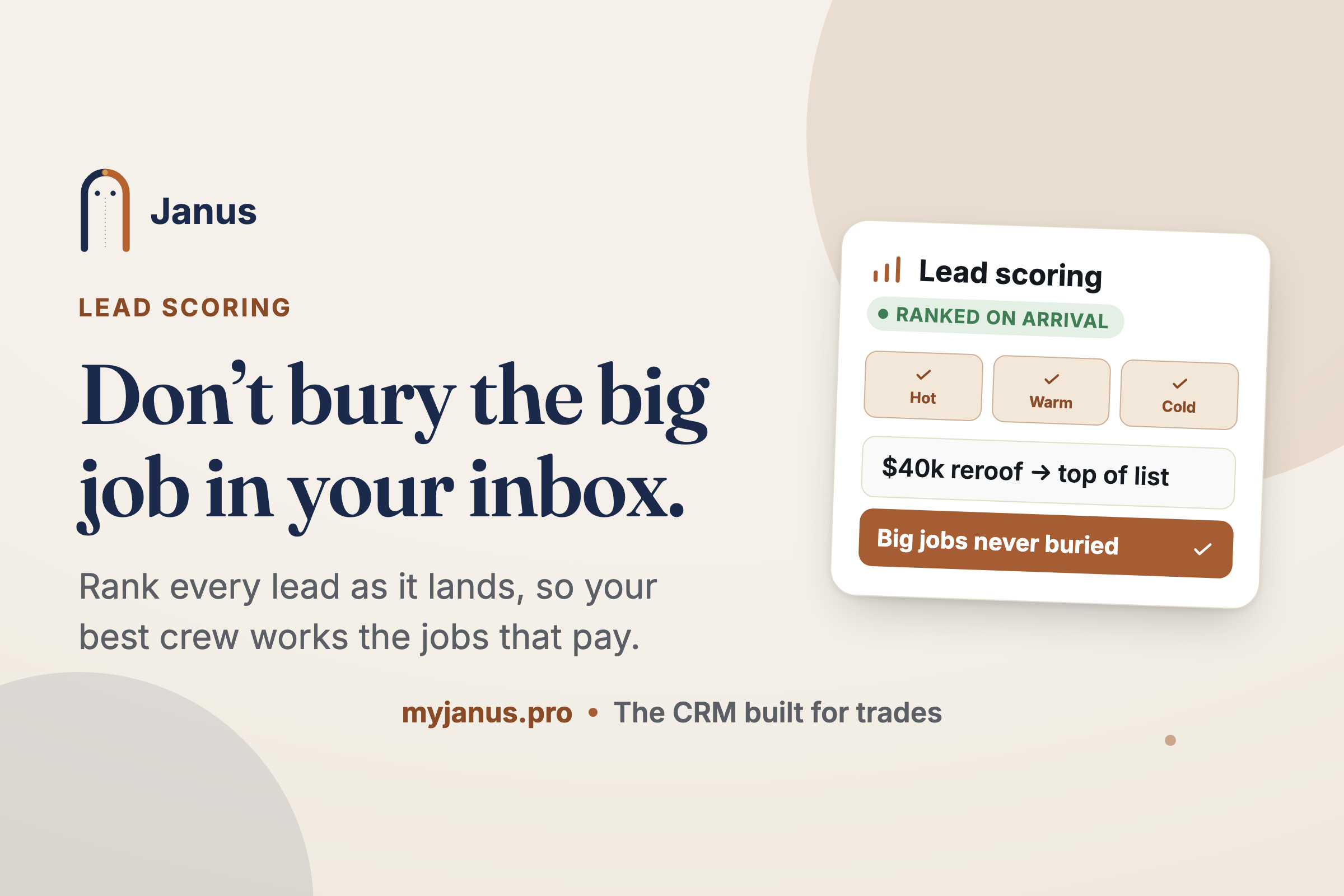
How to Prioritize High-Value Construction Leads Without Losing Your Best Jobs
Treating every lead the same is how contractors lose the $40k reroof to a faster competitor while chasing a tire-kicker. This four-step framework fixes that: define your high-value filters (project type, budget, decision-maker access, service radius), capture every inquiry through an automated front door, score each lead Hot / Warm / Cold with matching response times (Hot = 5-minute callback), and review the pipeline for five minutes each morning to see which criteria actually predict revenue.
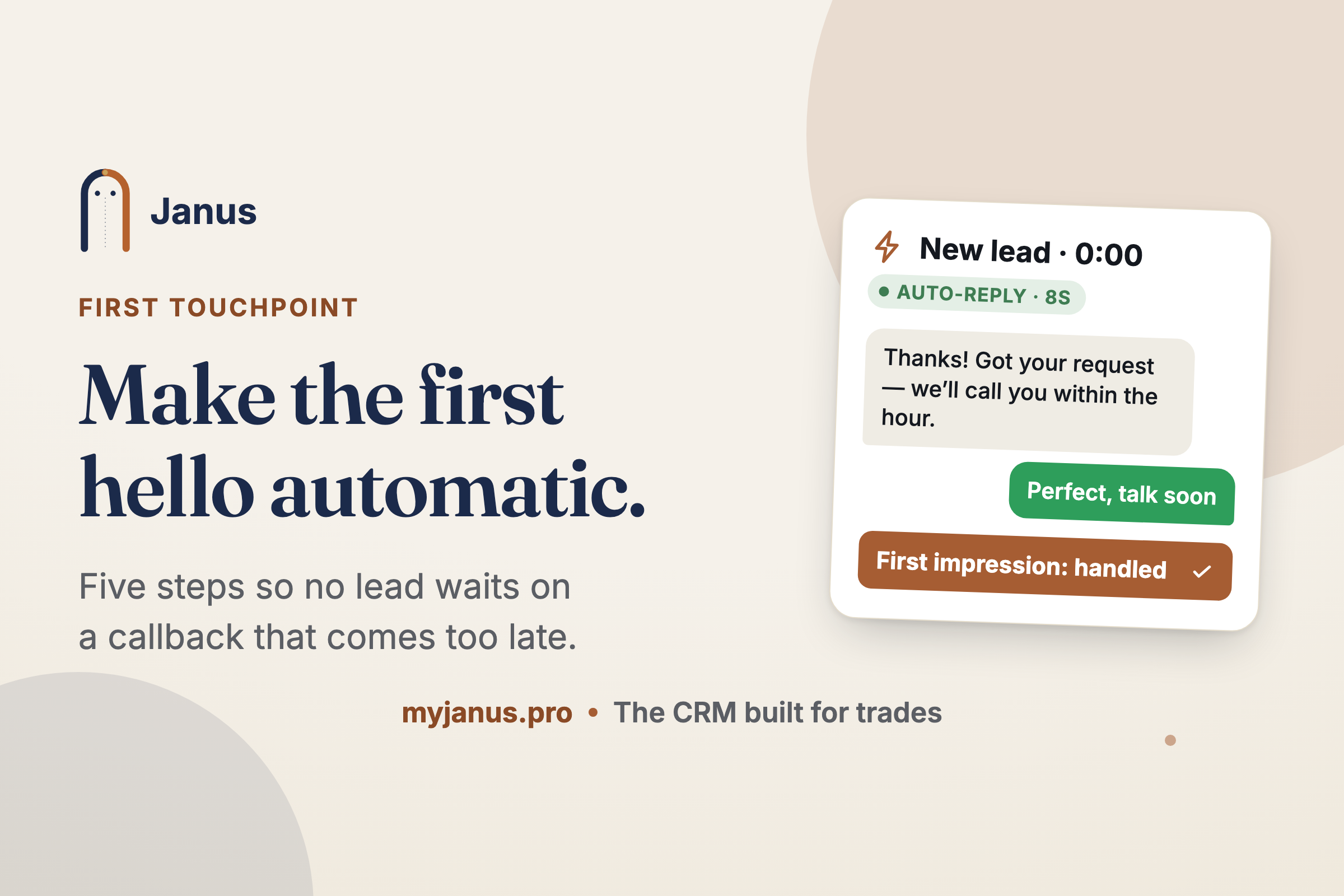
How to Automate the Initial Customer Touchpoint in 5 Steps
Most leads are lost in the gap between first contact and first response — and once you're past 30 minutes, they've moved on. This 5-step guide automates that opening move: map where prospects actually enter, set up missed-call text-back with a branded intake link, score leads Hot/Warm/Cold so the emergency never waits, add a welcome sequence with credentials and reminders, and keep the whole system tuned with a weekly review. No new hires required.
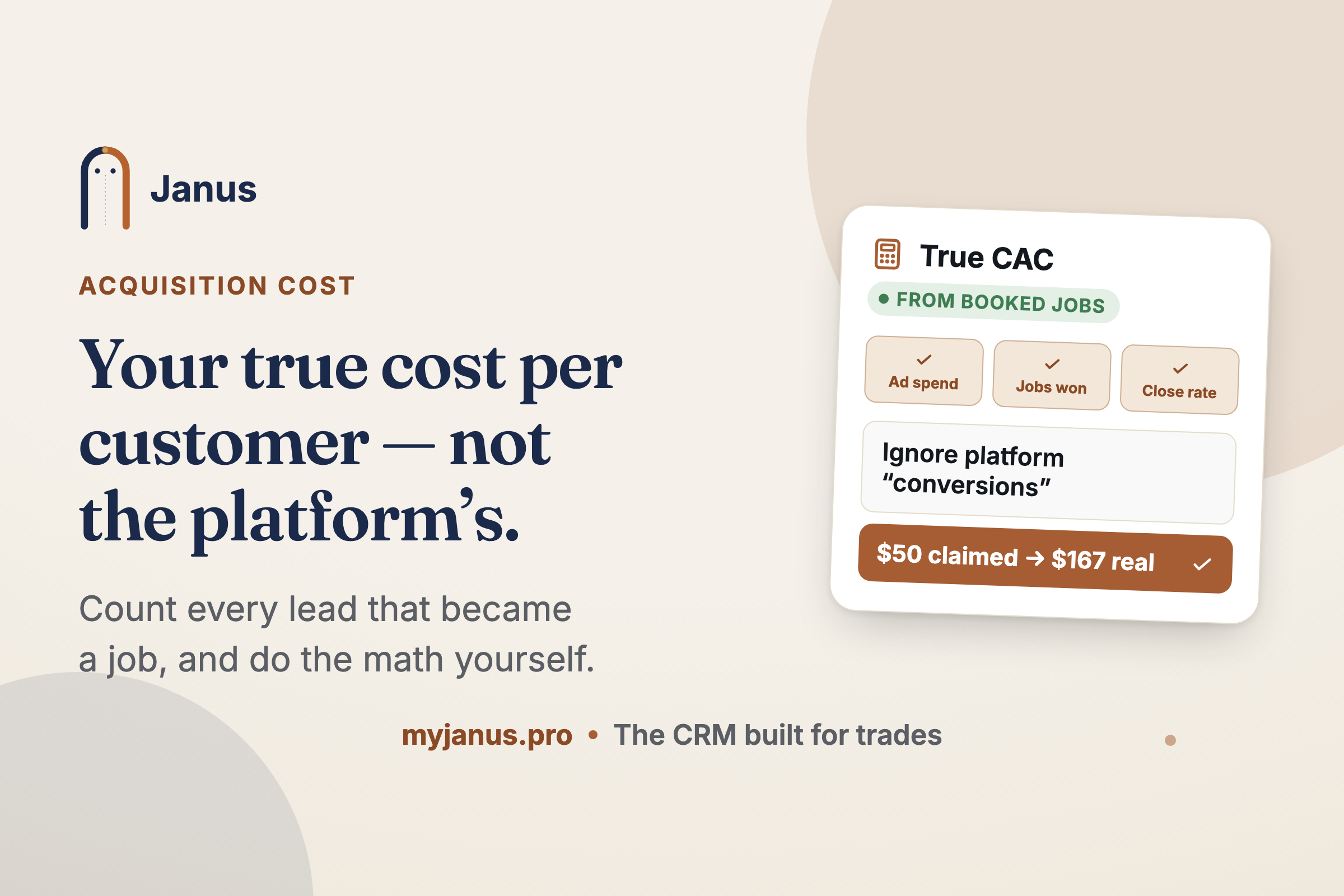
How to Calculate Real Cost Per Customer Acquisition Without Relying on Ad Platform Data
Ad platforms show you clicks and form fills, not paying customers — which is why 64% of marketing leaders don't trust their own numbers. This guide covers the real formula (total ad spend ÷ closed jobs) and a four-step method to run it yourself: find the gaps in platform data, tag and score every lead by its ad source, calculate true CAC against your cost-per-click, and cut the campaigns quietly producing nothing but Cold leads. A $4 CPC can hide a $380 true CAC.
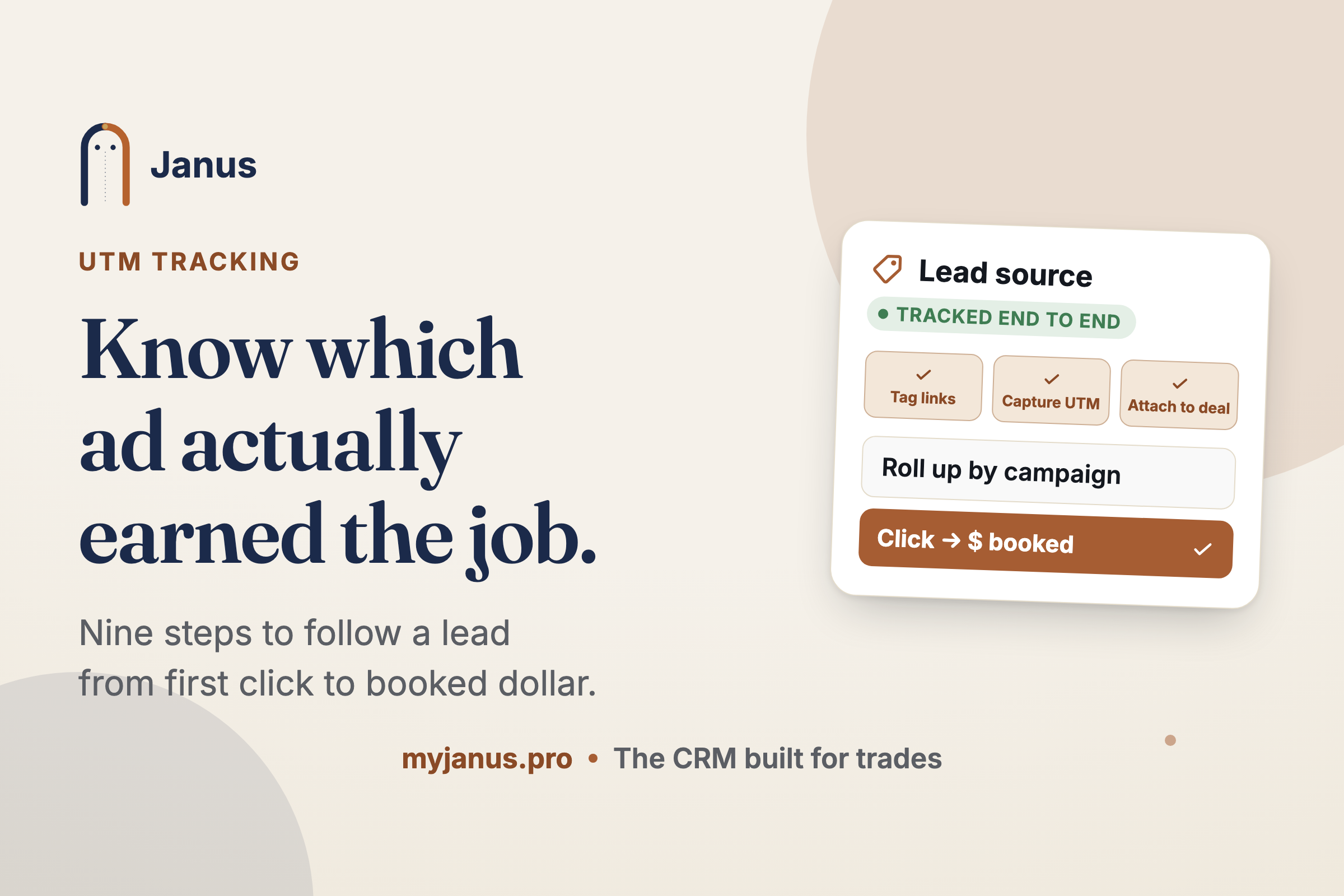
UTM Tracking Tutorial: Build a Lead Attribution System in 9 Steps
UTM parameters are digital caller ID for your marketing links — they tell you whether the yard sign, the Facebook ad, or the Google search actually produced a paying customer. This 9-step tutorial covers mapping your lead paths, building tagged URLs with Google's Campaign URL Builder, wiring the UTM data into your CRM so it follows a lead to the booked job, and the four naming rules that keep the whole system from breaking. Only 44% of marketers use UTMs consistently; here's how to be one of them.
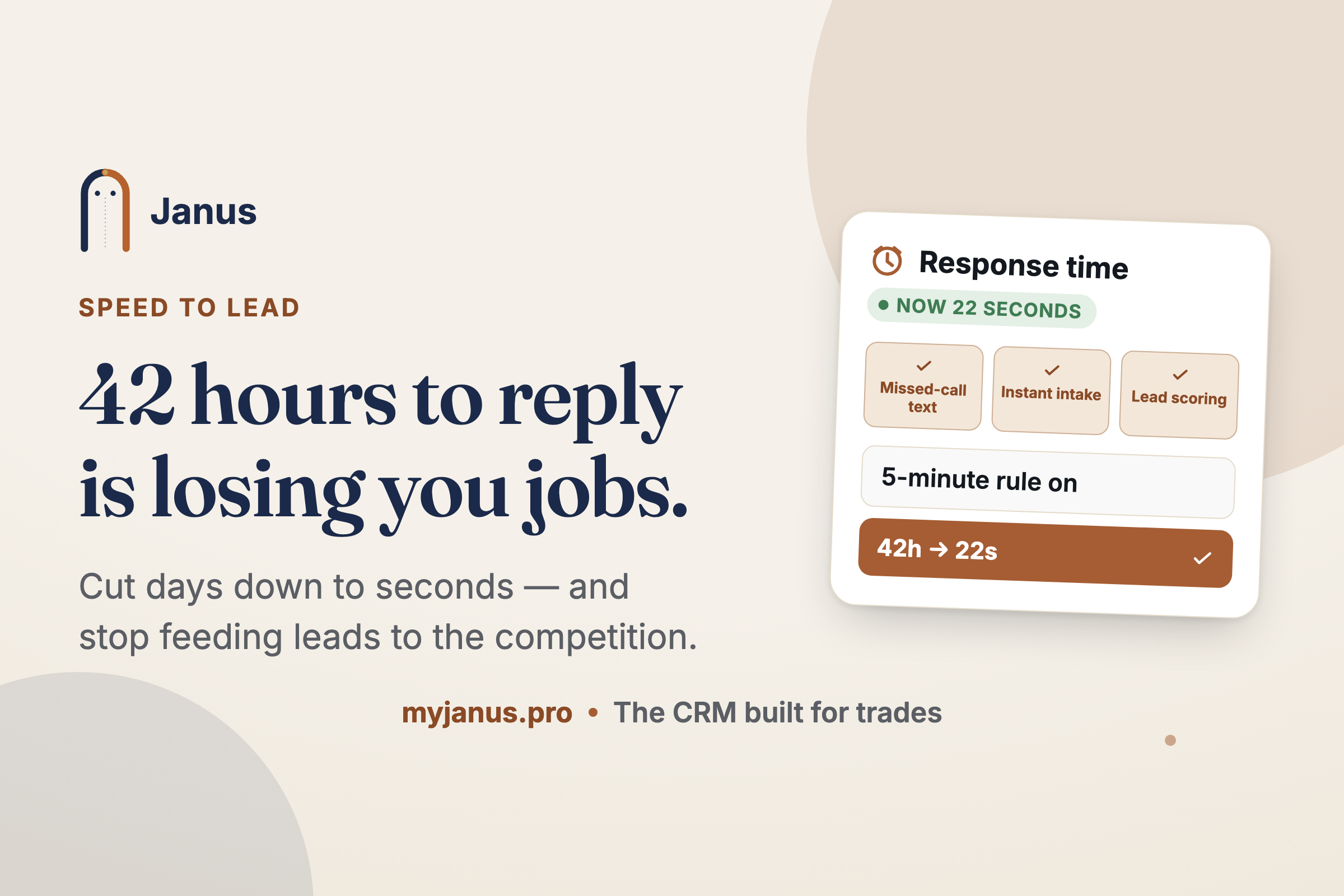
Why Your 42-Hour Lead Response Time is Killing Your Business (And How to Fix It)
The average contractor takes 42–47 hours to respond to a lead — and only 0.1% ever hit the 5-minute mark. That gap is expensive: a 5-minute response wins 9x more often, 78% of customers hire whoever answers first, and platforms like Google LSA quietly bury slow responders. This post does the math on wasted lead spend and lays out the fix: instant missed-call text-back, Hot/Warm/Cold scoring, branded intake pages, and a mobile CRM you can actually use on site.
Weave vs Janus Pro: Which CRM Best Captures Leads for Home Service Teams?
Weave and Janus Pro solve different problems. Weave is an office-based communication suite built for dental and medical practices — VoIP, text-to-pay, front-desk workflows — starting around $400/month per seat. Janus Pro is a mobile-first CRM for 1–5-truck home service teams: automatic lead capture from web forms and missed calls, Hot/Warm/Cold scoring, and flat pricing from $149/month for the whole crew. If your priority is catching every lead your ads paid for, the pick is Janus Pro.